Voices Of Our School: Ms. Merritt Shares Her Story
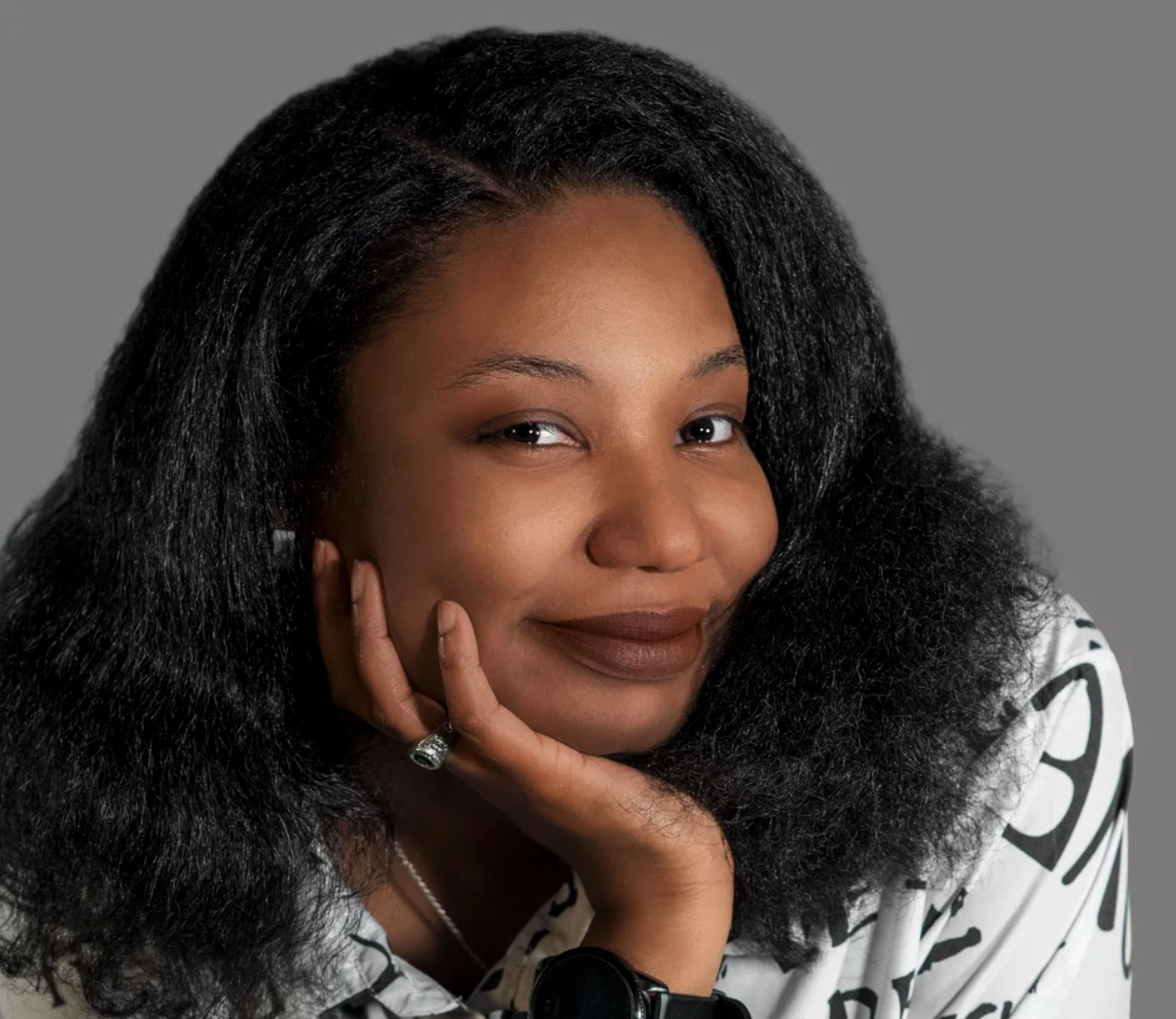
Interview by Angel Yussuf and Navon Jones. Photo by Bernette Dare.
Ms. Flonora Merritt is a very passionate teacher and alum at Friendship Collegiate Academy. We asked her about her experience at FCA and how she felt about the school atmosphere. We also asked about her career, and she went into deep detail about how she started out working in her field, as well as her thoughts on how students are doing and feeling at school.
Angel: What are some of your biggest accomplishments?
Ms. Merritt: As a teacher, some of my biggest accomplishments have been taking Friendship News Network's magazine, Rated T, from print to digital media on our current website. We have also produced a documentary called Fading Color, which is also on our website, and which screened at the Kennedy Center.
Angel: If you had to choose any career besides teaching, what would it be?
Ms. Merritt: Kind of like what I'm doing right now, I have my own publication called Noir Neon Vibes, and I have a podcast called Neon Mike. I love telling other people's stories and giving people their flowers for the amazing things that they are doing. So I think what I'm doing now as a teacher is still aligned with what I would do outside of education.
Navon: What are the biggest challenges schools are facing?
Ms. Merritt: The biggest challenge, I think, is just getting student engagement and attendance. I've seen a lot of students opting to skip class as opposed to attending. It's not as simple as, oh, we don't have school spirit. It's just that there's a lack of motivation And it's just like, how do you teach that? How do you motivate somebody? I always thought that was something that was just instilled in you.
Navon: Is that something that you've seen more of over these past few years?
Ms. Merritt: I would say most definitely, because I have never seen people who just opt to miss half of their first block class. For the most part, it's daunting. It just boggles my mind, because you already know your parents are going to chew you out if you don't have your grades under control, but it's just like they don't really care.
Navon: How would you describe the mood among FCA staff?
Ms. Merritt: It's a mixed bag. There's optimism like, okay, we're going to turn things around. There's supposed to be a year change, a year reset to really bring back to what Collegiate used to be. But there's also a level of a bit of pessimism. It's just as I was speaking earlier, that level of trying to get students motivated to do their work. Because if you see that the students don't really care or they're not engaged, then it kind of affects your mood. You don't want to put in as much effort, or you don't necessarily want to be here because it's just like, what's the point? It's kind of up and down between staff members. I think everybody wants to do what they can to support our scholars, but it's kind of hard to see the light at the end of the tunnel for some.
Angel: What are the expectations for before and after school hours and extra duty?
Ms. Merritt: The expectations of teachers are to do their lesson plans, put in grades, and call parents in need of extra support for the scholar. If you want to go beyond that, some teachers may host a club to keep our students safe and have a more enriching experience. We're also mandated reporters, so if we see a student in need, we've got to do what we can to provide those support services for those troubled students.
Angel: What do you think is a good teaching method for your class?
Ms. Merritt: I would say make sure that things are hands-on. We work with a lot of technologies, whether it's with the current recorder that we're using or cameras and laptops. You have to do a lot of demonstrations so that students know how to use the equipment. But also try to make things self-paced, because there are some scholars who can go further ahead than others. Also, give the opportunity to work with scholars who need extra support.
Angel: Do you think that teaching method has helped you throughout the years?
Ms. Merritt: I would definitely say so. Doing those demonstrations and walk-alongs with the scholars definitely helped them execute the projects that they needed to do. I hope that my demonstrations are working on y'all, so you can let me know how I'm doing, because I could think that I'm doing okay, but you have to consider yourself like you're the customer. Are you satisfied with what you are learning? Is what I'm doing really helping you produce the project that you are assigned? If not let me know, because your feedback will probably be way more helpful than what I may get from anywhere else.
Navon: How did you learn to have patience with the diversity of students you teach?
Ms. Merritt: That took time, because in my early stages of teaching, it was a struggle, because I think when you work with scholars, there's a certain expectation that you would think some students would already have. However I've learned to put my ego aside and actually listen to students' concerns so I can see where they're coming from, and that has definitely helped in a lot of areas. Now, there are some students who just like, you know, you got to pray on it, and also to reach out to neighboring teachers that may have a better rapport with that scholar, and just kind of give you some tips on how to better manage them. But I would say you have to get to know the person, know where they're coming from, know what they're dealing with, and that seems to work pretty well for me.
Navon: What was it like when you first started at FCA?
Ms. Merritt: When I first started teaching, I came aboard, for instance, as an advisor for Friendship News Network, and I was just doing it after school. After having the conversation with my boss, Ms. Kaufman, we were like, if we really want to produce the way we want to produce, it has to be a class. So I didn't really have formal training. It was just, here's what you have to do, here's your expectations, and then, oh, you're going to be working with the early college students, which the expectation was, well, they're more advanced, so they should be able to do the writing assignments. I learned quickly that they were struggling. So it's just like, okay, how do I help the scholars? First of all, how do I have the conversation with them, like, yeah, your writing is not there when they're in what many people would consider the more advanced or elite classes. That was an awkward conversation. Then, we had to identify that this is a problem, so let's come up with a system where we can still execute and publish like we need to. Once we got over that hump, it was a little bit more manageable, but I didn't really have much assistance that showed me exactly how to teach. It was more so a lot of figuring it out on my own and trying to reach out to my coworkers for tips and advice, and a lot of advice that I still carry with me to this day.
Angel: How come it's so easy for you when you first started?
Ms. Merritt: Because I graduated from here, so there were some teachers that remembered me and were excited to see me. And there's always been a strong support system, even though I was still trying to figure out how to do things. I could always reach out to somebody for assistance, whether it was actual support in my class or just even a shoulder to lean on, or somebody I could talk to and vent about some of my experiences.
Angel: What made you get into photography?
Ms. Merritt: My student. So shout-out to my former student, SyQuan Clark. They wanted to do photography, but we didn't have a teacher at the time or a dedicated person. We had maybe somebody to come in and do a workshop, but we didn't have a dedicated teacher. So it was just like, okay, my sister knows photography, and she recommended some YouTube videos and a book to read, so I taught myself. There were times when I was learning photography at the same time I was teaching it. But it evolved to the point where we now have our own gallery, along with our visual arts teacher, Ms. Abney, annually. So the only reason I learned photography is because a student wanted to learn.
Angel: What opportunities has photography provided?
Ms. Merritt: Oh, my God, first, so many free tickets. The benefits of being a photographer and someone that's a good photographer, you get invited to places people want or definitely need that exposure. I have gone to concerts, I have been to different venues, and made a lot of connections through my photography. Actually, this past school year, this past September, October, I was part of my first in-person gallery with Old D.C. Dupont Underground. And that was, I just applied for that on a whim. Even though my original intention was just showing the skill to the students that really wanted to do photography, I was actually showing and doing things for myself and putting myself in rooms of notable people and getting these dope experiences.
Angel: Throughout your career, from what you've done so far, do you feel like your career path could expand?
Ms. Merritt: Most definitely. I'm always putting myself in rooms where so many different famous people are. I interviewed Janelle Monáe along with Roomful of Birds and Safari TV. I'm even going to do that again this Blerdcon, with Redman and Godfrey, and maybe other different celebrities. So I would say my career is, and even as a teacher, I'm still here. They didn't fire me. You know what I mean? So I would say there's always room for advancement and continuation. Whether it's me teaching or doing my own publication, I manage to balance both in where they're mutually beneficial. Things are definitely looking up. Even if I get famous, I'll probably still be here.
Navon Jones and Angel Yussuf are seniors at Friendship Collegiate Academy.