Why It's Good to Quietly Quit
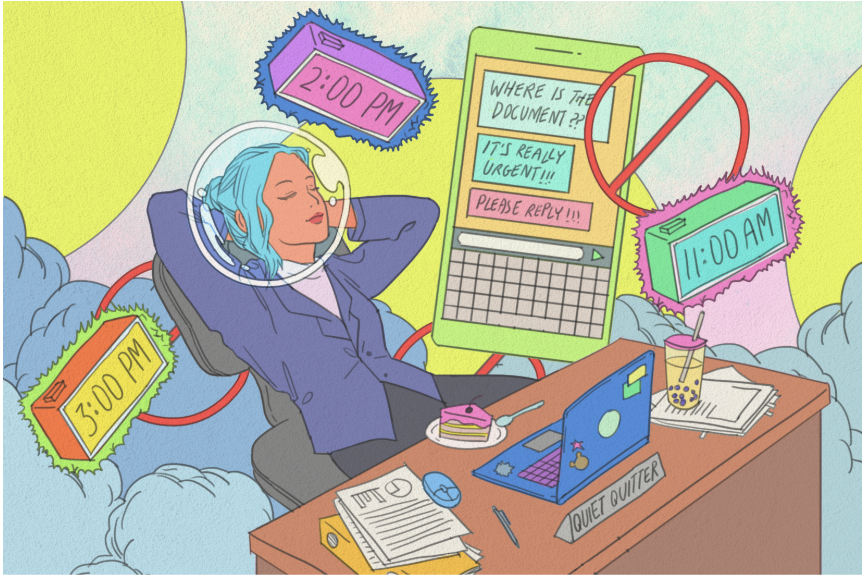
Commentary by Satila Ali. Photo courtesy of Thir.st.
Quiet quitting has become a major workplace trend that affects productivity, motivation, and how people think about work. It doesn’t mean you actually quit your job. Instead, you stop taking on extra tasks you’re not paid for. Quiet quitting often involves sticking to predefined tasks instead of improvising or taking on “extra” social or collaborative work. Quietly quitting is what introverts need to maintain their mental health.
An introvert is someone who gets energy from spending time alone or in calm, low-stimulation environments.Introverts avoid burning excessive reserve energy by focusing only on essential tasks. Quiet quitting often results in less unnecessary social or emotional labor like managing others’ feelings, taking on extra teamwork, or being overly available. I believe the benefits of quietly quitting help establish healthy boundaries, and a better work-life balance.
I believe people are quietly quitting because they are overworked. If more people start quietly quitting, I think more people will stay at their jobs. About 50% of U.S. workers are quiet quitters, meaning that about half of the workers in America feel that they are being overworked. More people might stay at their jobs if they are not feeling stressed, and they could have more energy to do their jobs. If people overwork themselves, they often get sick or lose interest in their work. Overworking also can cause extreme stress, exhaustion, high blood pressure, trouble sleeping, and a weakened immune system.
Satila Ali is a senior at Friendship Collegiate Academy.