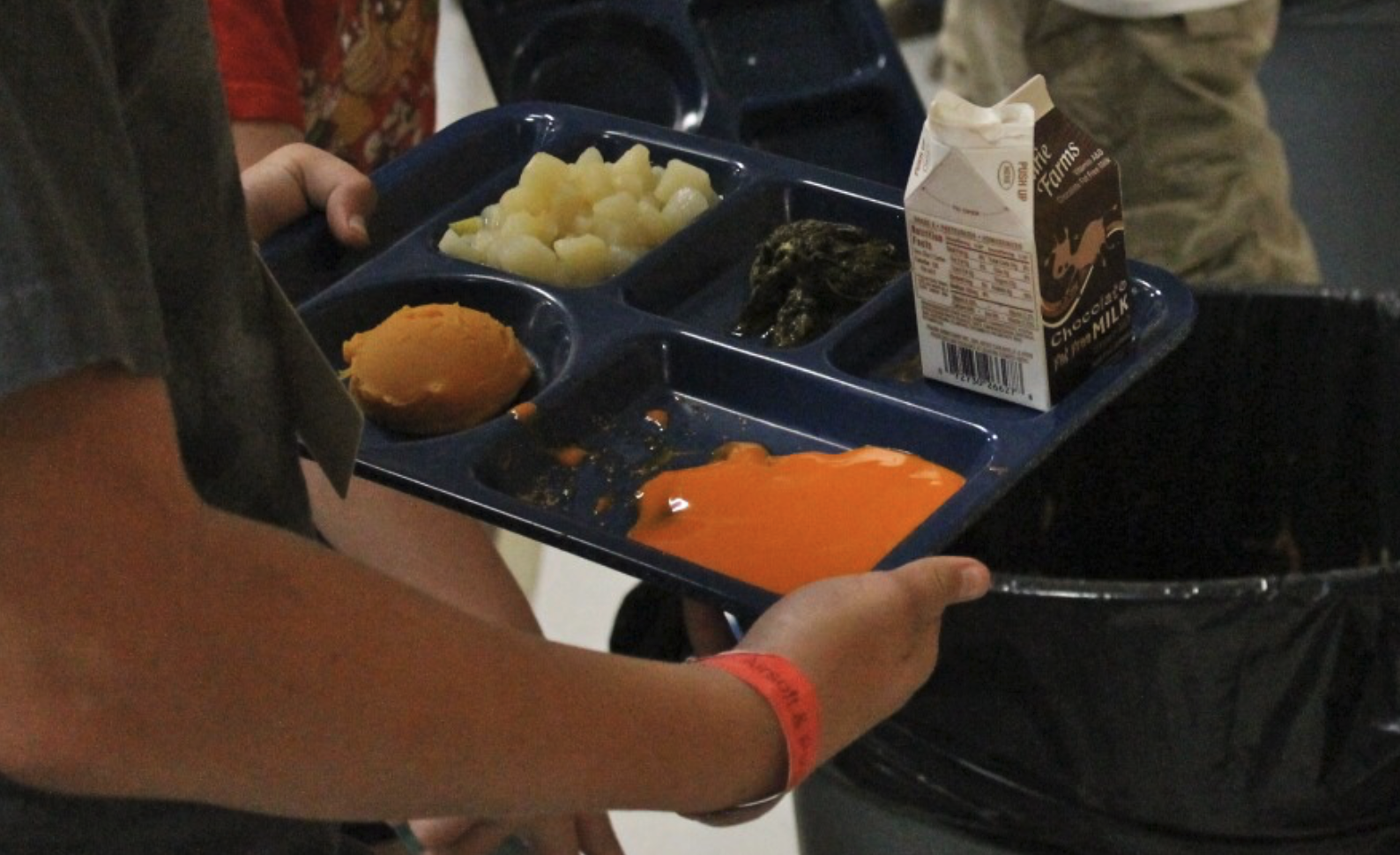
Story by Keymani Dyer. Photo courtesy of KBIA.
School lunch is provided many different ways at many different schools. In some districts, students that aren't able to afford to buy the lunch force themselves not to eat because free lunch is visually dissatisfying making things harder for kids to try. Poor school lunch can cause students to become sick because of the packaging or by how long these things are left out unattended, causing students to not eat what's being served.
In 2010, The First Lady Michelle Obama decided she was going to focus on schools and their lunches, because she noticed how her children's diets weren’t healthy, which led to the Hunger-Free Kids Act. This created healthier lunches, but also left some students upset that they had to eat healthy. Many kids choose not to eat, leading to large amounts of food to be thrown out.
Most food waste issues in schools are encouraged by the quality of meals being provided. This makes students comfortable with trying different foods that are healthy for the body, including different proteins. Aniyah, a 13 year old girl who attended White Oak middle school in the 8th grade complained, “I've seen students toss their entire tray because the food looked like it had been sitting out all morning, and no one wanted to risk getting sick over school lunch.”
In conclusion, ways schools could prevent food waste is by creating meals that are more appetizing, and assuring food safety is taken seriously. Also, improving the packaging of food, and letting students choose the items they would want to eat and not forcing them to take everything, may help. Also charging for meals can cause inequalities.
Keymani Dyer is a freshman at Friendship Collegiate Academy.